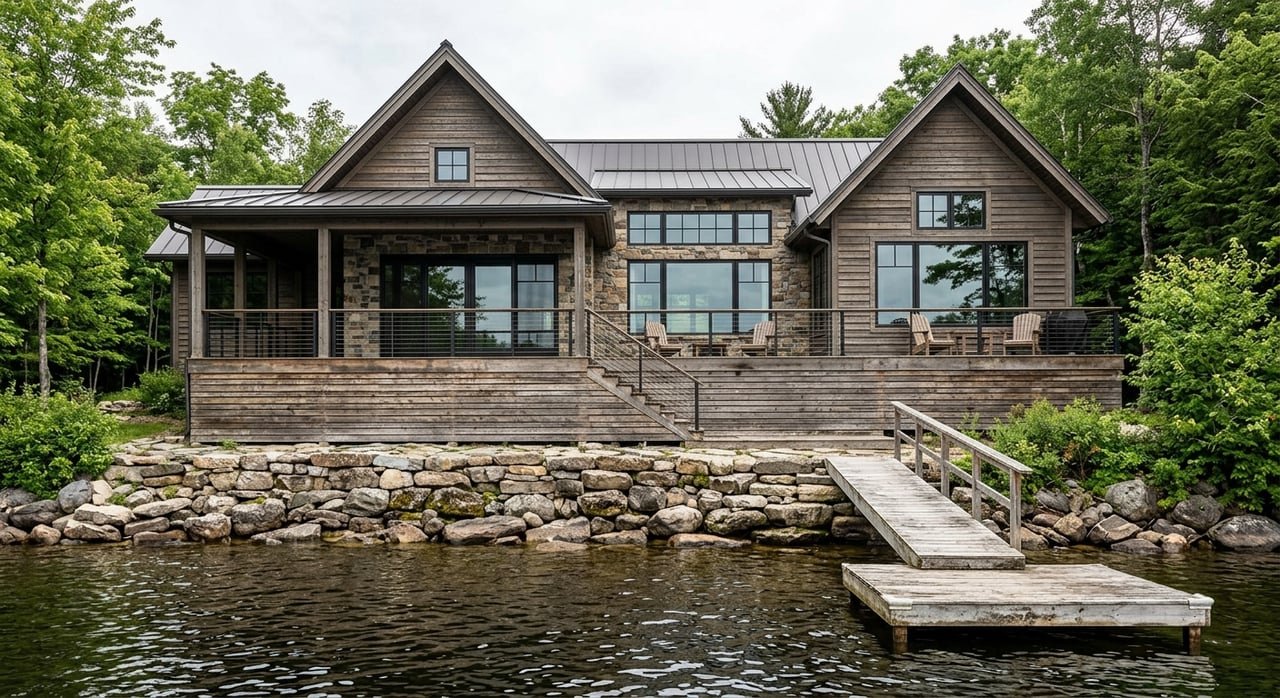
Wondering why one Lake County waterfront home sells quickly while another sits for months? If you are preparing to sell, it is easy to assume the word "waterfront" alone guarantees a top-dollar price. In reality, buyers look much closer at shoreline usability, views, permits, and timing. This guide will help you understand what really drives value in Lake County so you can price your waterfront property with more confidence. Let’s dive in.
Why pricing matters more on the water
Waterfront homes often feel unique, and that can make pricing tricky. But in Lake County, the market data suggests sellers should be careful about overreaching.
Realtor.com housing market data for Lake County reported a December 2025 median home price of $722,000, an 87% sale-to-list ratio, and 135 median days on market. The same source, along with the research summarized for this article, points to a market with value growth but also long selling timelines.
That matters because waterfront buyers are often selective. If your property is priced well above what its shoreline, access, and improvements support, it may stay on the market through key selling months instead of attracting strong early interest.
Start with same-lake comparisons
A waterfront home on one lake is not always comparable to a waterfront home on another. Even within the same county, buyers may value shoreline shape, water depth, access, and views very differently.
Fannie Mae's comparable sales guidance says comparable properties should have similar physical and legal characteristics. For Lake County waterfront pricing, that means same-lake sales are usually more useful than broad county averages.
If recent same-lake sales are limited, older or competing-area sales may still help, but they need thoughtful adjustment. That is especially important in rural and waterfront markets where no two parcels are exactly alike.
Break value into parts
One of the biggest pricing mistakes is treating a waterfront home as if all value sits in the house itself. In many cases, buyers are paying just as much attention to the land and water access as they are to square footage or interior finishes.
A smart pricing strategy separates the property into four core parts:
- Land value
- House value
- Dock or shoreline improvement value
- Legal and practical water access value
Fannie Mae's appraisal guidance for waterfront location factors supports this approach by requiring appraisers to consider site, legal characteristics, and property condition. In plain terms, two homes with similar layouts can have very different values if one has usable waterfront and the other does not.
Usable shoreline can shift price fast
Not all frontage works the same way. A property with easy shoreline access, helpful depth, and practical lake use may justify a stronger price than a home with steep bank, limited access, or shoreline constraints.
Lake County's lakeshore rules help explain why. Under the county's updated regulations, docks generally may not exceed 60 feet if there is about 5 feet of water depth at the end, though special circumstances may allow extension up to a 100-foot maximum. Floating swim platforms also may not be anchored more than 100 feet from shore without a variance, according to the Lake County lakeshore regulations.
For pricing, that means buyers are not simply counting feet of frontage. They are asking whether that frontage is actually usable for the way they want to enjoy the property.
Views matter, but quality matters more
A lake view can add real value, but not every view deserves the same premium. Buyers often notice the difference between broad open-water views, partial views, and views that may be reduced by terrain, vegetation, or future changes.
Lake County's own regulations note the importance of preserving scenic qualities from public roads and waters, which highlights how meaningful views are in this market. The county's lakeshore protection regulations provide local context for why setting and sightlines matter.
Research cited in your source material from the Appraisal Institute found that water views can command premiums ranging from 8% to 31%, depending on view quality. The takeaway is simple: if your home has a true open-water setting, that may support a premium, but the premium should still match what buyers actually see from the home and outdoor spaces.
Dock condition and permit history count
A dock can help your asking price, but only if it adds real utility. Buyers and appraisers will want to know whether the dock is permitted, functional, and usable at the property's current depth and seasonal conditions.
Lake County says permits are required for work that alters the character of a lake, lakebed, or lakeshore within 20 horizontal feet of the shoreline. The county also notes that its permit process does not replace possible state, tribal, or federal approvals, as explained on the county's Lakeshore Protection page.
Before claiming a premium for lake access, it helps to document:
- Dock permit history
- Shoreline improvement records
- Lift or shore station condition
- Water depth at the dock area
- Any survey or frontage documentation
Clear records can support your price and reduce hesitation during due diligence.
Seasonality affects buyer perception
Waterfront pricing is not only about what the property looks like in peak summer. It is also about how buyers experience it when they tour the home.
According to Energy Keepers Flathead Lake data, lake levels can vary meaningfully with runoff, weather, and other operating conditions. In June 2025, Energy Keepers said Flathead Lake would not reach full pool that year, and it noted that dock access and boat storage could be affected.
Your research also noted a USGS reading showing Flathead Lake at Polson at 2,886.91 feet on March 15, 2026, while full pool is 2,893 feet. That gap of roughly 6 feet helps explain why a dock or shoreline can look very different in spring than it does later in the season.
If your home is being shown when water is low, buyers may mentally price the property based on current conditions. That does not mean you should discount unfairly, but it does mean your pricing should reflect how the property presents in real time.
Countywide data is only the starting point
Broad market numbers can be useful, but they should not be the final word for a waterfront listing. Countywide medians blend many property types together, including homes with no water access at all.
Your research report noted that Redfin's waterfront page showed 86 waterfront homes for sale in Lake County at a median listing price of $687,000 and 164 days on market. Combined with broader county trends, that suggests waterfront supply may be limited, but listings can still take time to sell.
That is why pricing off the highest nearby sale can be risky. If that sale had better frontage, stronger views, better dockability, or cleaner legal access, it may not support your number without adjustments.
A practical pricing checklist
If you want to price wisely, focus on proof, not assumptions. A well-supported price tends to create better buyer confidence than a price built on general waterfront appeal.
Here is a practical checklist to work through before listing:
- Review recent same-lake sales first
- Compare frontage type, water depth, and shoreline usability
- Document dock condition and permit history
- Confirm whether the parcel falls under current county lakeshore rules or a different jurisdiction
- Evaluate the quality of the lake view from main living areas and outdoor spaces
- Consider current seasonal lake conditions at the time of marketing
- Prepare records that support legal access and improvements
This kind of preparation can make your pricing more defensible and your marketing more credible.
Why overpricing can cost you
Some sellers feel they should start high and reduce later if needed. In a fast-moving market, that may sometimes work. In a slower market, it can backfire.
Lake County's reported sale-to-list ratio and longer days on market suggest negotiation is common and automatic escalation is not guaranteed. If your price misses the mark, buyers may wait, assume there is a problem, or compare your property to stronger waterfront options.
A better strategy is to enter the market with a price that reflects what buyers can verify. When your price lines up with shoreline utility, view quality, documented improvements, and current market pace, you give yourself a better chance to attract serious attention early.
Pricing waterfront property with confidence
Selling waterfront property in Lake County is rarely about choosing one number from a county median. It is about understanding what buyers value most and proving why your property deserves its price.
The strongest pricing plans usually start with same-lake comparisons, then adjust for frontage, views, dock usability, legal access, and seasonality. When those details are documented clearly, you put yourself in a better position to attract the right buyer and negotiate from strength.
If you want a tailored pricing strategy for your Lake County waterfront property, connect with Ashley Inglis for a personalized market consultation.
FAQs
How should you price a waterfront home in Lake County?
- Start with same-lake comparable sales, then adjust for shoreline usability, view quality, dock condition, permit history, and legal water access.
Does a dock add value to a Lake County waterfront property?
- A dock can add value if it is permitted, in usable condition, and functional at the property's water depth and seasonal lake level.
Do lake views increase home value in Lake County?
- Lake views often help value, but buyers usually pay more for strong open-water views than for partial or limited views.
Why do Lake County waterfront homes sometimes take longer to sell?
- Market data in the research report shows longer days on market and room for negotiation, so buyers tend to be selective and pricing needs to be well supported.
Should you use countywide home prices to price a Lake County waterfront listing?
- Countywide prices are a starting point, but waterfront homes should usually be priced using same-lake sales and property-specific features instead of broad averages alone.