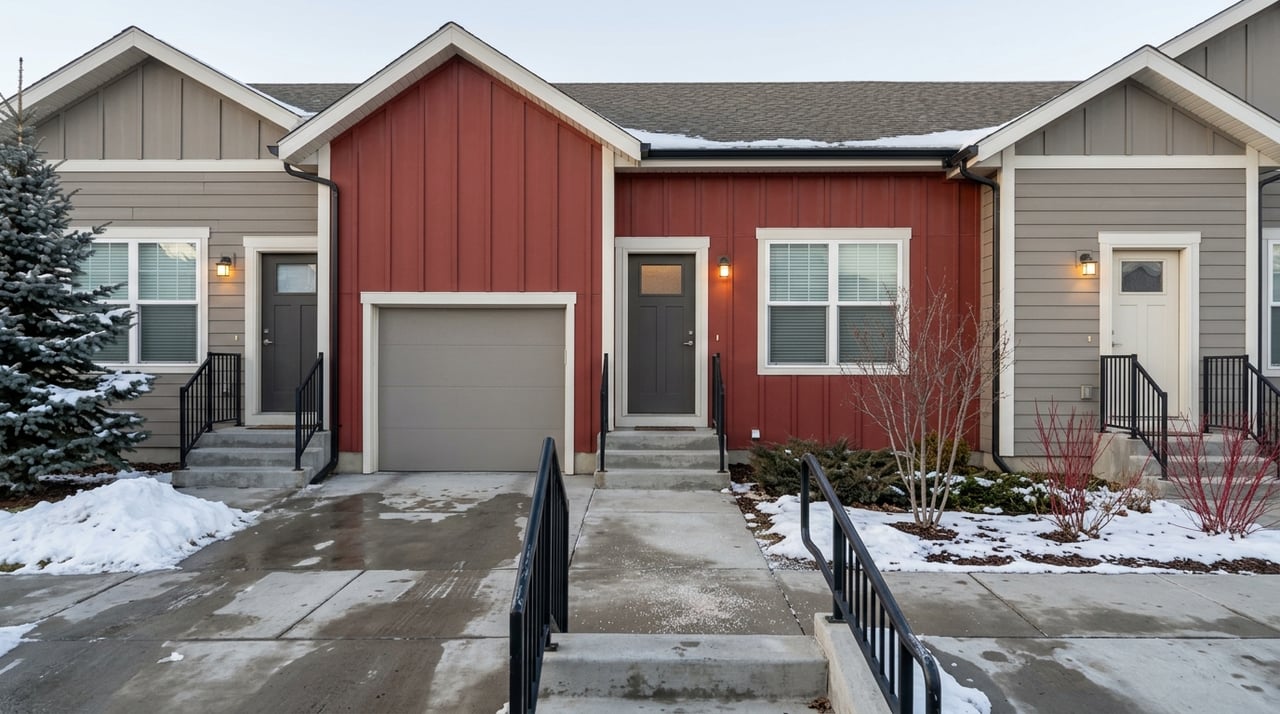
Wondering whether a condo or townhome is the smarter way to buy in Missoula County? If you want a lower-maintenance home or a more approachable price point, attached living may deserve a closer look. The key is knowing that in Montana, these properties can look similar but work very differently from a legal and financial standpoint. Let’s break down what condo and townhome living really means in Missoula County and how to decide what fits your goals.
Why attached homes matter in Missoula County
For many buyers, the biggest reason to consider a condo or townhome is price. In Missoula County, 2025 market data from the Montana Association of REALTORS® showed a median sales price of $592,000 for single-family homes, compared with $497,950 for townhouses and $343,750 for condos.
That gap matters in a market where affordability is still a challenge. Missoula Organization of REALTORS® reported that buying a median-priced home at $560,000 with 5% down and a 7.07% interest rate would require $174,954 in annual income, compared with a projected 2024 Census median family income of $90,200. For many buyers, attached housing becomes one of the most realistic ways to enter the market.
That does not mean every condo or townhome is a bargain. It does mean these property types often create more options if you want to stay in Missoula County while keeping your purchase price below the typical detached-home range.
Condo vs townhome in Montana
In Montana, a condo and a townhome are not simply style labels. They can represent different ownership structures, and that distinction affects what you own, what you maintain, and what rules apply.
A condominium generally means you own an individual unit plus an interest in common elements under Montana’s Unit Ownership Act. A townhome or townhouse often means you own the dwelling and the land beneath it, while common areas may be jointly owned.
In the City of Missoula, the Townhome Exemption Development, or TED, process reinforces this difference. The city describes TED as a legal process for dividing land into ownership units that works similarly to a condo arrangement, but requires ownership of the land under the dwelling unit.
Here is the important takeaway: the marketing label does not tell the whole story. Two attached homes may look nearly identical from the street but have different legal structures, different maintenance responsibilities, and different governing documents.
What condo living usually offers
Condo living often appeals to buyers who want simplicity. In many condo communities, monthly dues help cover maintenance of shared property and amenities, which can reduce the amount of day-to-day exterior upkeep that falls on you.
That can be especially helpful if you travel often, are relocating, or simply want a lock-and-leave lifestyle. Condo layouts may include flats or stacked units, and Montana law defines units broadly enough that they can occupy one or more floors with direct access to a street or common area.
The trade-off is that condo living is usually more structured. You will likely have association rules, shared decision-making, and monthly dues that need to be factored into your budget.
What townhome living usually offers
Townhomes often strike a middle ground between a condo and a detached home. In many cases, you get an attached home with your own entrance and ownership of the land beneath the unit, while still sharing walls and possibly some common areas.
In Missoula, that can take different forms. A rowhouse is a building type with three or more attached units and shared sidewalls, while a townhome is an ownership type that may include rowhouses or even detached houses in some TED projects.
For buyers, that often means more variation from one property to the next. Some townhomes may feel very close to single-family living, while others function more like a planned attached-home community with shared maintenance and common rules.
The lifestyle pros to consider
Attached living can be a strong fit if you want a home that is easier to manage. Many buyers are drawn to condos and townhomes because they usually offer:
- Lower entry prices than detached single-family homes in Missoula County
- Less exterior maintenance than many stand-alone homes
- Smaller footprints that can feel easier to furnish, clean, and maintain
- Lock-and-leave convenience for travel, second-home use, or busy schedules
- A practical option for first-time buyers, downsizers, and relocation buyers
For some households, those benefits are not just nice extras. They are what make homeownership workable in a competitive market.
The trade-offs to understand
Attached living also comes with limits, and it is better to know them before you write an offer. The biggest issues usually involve autonomy, shared costs, and community rules.
Depending on the property, governing documents may address things like parking, pets, noise, renovations, renting, maintenance, and use of common areas. If you want broad freedom over exterior changes, landscaping, or property use, a condo or townhome may feel more restrictive than a detached house.
There is also the financial side. Monthly dues, reserve funding, and possible special assessments can affect your real cost of ownership over time.
What to review before making an offer
When you are considering a condo or townhome in Missoula County, the most important step is verifying the ownership and governance details. You want to understand exactly what you are buying, not just what the listing calls it.
A smart review process includes:
- The recorded declaration
- CC&Rs and bylaws
- Current rules and regulations
- Monthly dues and what they cover
- Reserve fund health
- Any history of special assessments
- Maintenance responsibilities for roofs, siding, parking, and common areas
- Rental restrictions, if that matters to your plans
- Parking and storage arrangements
Under Montana law, association bylaws must address topics such as board elections, meetings, maintenance and repair of common elements, collection of common expenses, rulemaking, and restrictions on the use of units and common elements. That tells you how important the documents really are. They shape everyday ownership.
Missoula County rules that add context
Local rules matter in Missoula County because attached ownership can be created through different development and recording processes. County subdivision regulations state that major subdivision review includes condominiums, while some land for condominiums, townhouses, and townhomes may be exempt from review under specific conditions.
Those conditions include situations where the development is built on previously subdivided land and was either contemplated in the approved subdivision or conforms to applicable zoning. The required declaration and related materials must be recorded with the county clerk and recorder.
Inside the City of Missoula, the TED program adds another layer of context. The city says TEDs are intended to encourage affordable infill ownership without subdivision review, are not intended for greenfield sites lacking infrastructure, and must address assessments and maintenance of common areas or common elements before filing.
For you as a buyer, the practical lesson is simple: ask how the property was created and what documents control it. That answer can affect ownership rights, maintenance obligations, and future resale questions.
Who condo or townhome living fits best
These property types often make the most sense if you value convenience, lower maintenance, and a lower purchase price than a detached home. In Missoula County, that can be especially appealing for first-time buyers, downsizers, and relocation buyers who want a manageable home base.
They can also work well if you prefer a smaller footprint or do not want to handle all exterior upkeep yourself. For some buyers, the appeal is practical. For others, it is about flexibility and lifestyle.
On the other hand, attached living may be a weaker fit if you want more privacy, a larger lot, fewer shared rules, or broad freedom to remodel exterior features. In that case, a detached home may align better with your priorities, even if the price point is higher.
How to compare homes more clearly
When you tour attached homes in Missoula County, it helps to compare them using the same checklist each time. That keeps you focused on the details that really affect day-to-day ownership.
Look closely at:
- Ownership structure
- Monthly dues
- What the association maintains
- Condition of common areas
- Garage, parking, and storage setup
- Rules on pets and rentals
- Exterior repair responsibilities
- Reserve funding and special assessment history
- Whether the home is a condo, fee-simple townhome, or TED-created ownership unit
This kind of side-by-side comparison can save you from making decisions based only on layout or curb appeal. In attached housing, the documents are just as important as the floor plan.
Making the right move in Missoula County
Condo and townhome living can open the door to homeownership in Missoula County in a way that feels more manageable, both financially and practically. But the best choice depends on more than price alone. You need to understand what you own, what you share, what you pay monthly, and how the community is governed.
That is where local guidance makes a real difference. If you are weighing attached homes against detached options, or trying to understand the difference between a condo and a townhome in a specific listing, working with someone who knows the Missoula County market can help you move forward with more clarity and confidence.
If you are exploring condos or townhomes in Missoula County and want thoughtful, high-touch guidance tailored to your goals, connect with Ashley Inglis for a personalized market consultation.
FAQs
What is the difference between a condo and a townhome in Missoula County?
- In Montana, a condo usually means you own an individual unit plus an interest in common elements, while a townhome often means you own the home and the land beneath it, with some shared areas possibly jointly owned.
Are condos cheaper than single-family homes in Missoula County?
- Based on 2025 Missoula County market data, condos had a median sales price of $343,750, compared with $592,000 for single-family homes.
Are townhomes more affordable than detached homes in Missoula County?
- Often, yes. In 2025 Missoula County data, townhouses had a median sales price of $497,950, which was below the single-family median of $592,000.
What should you review before buying a condo in Missoula County?
- Review the declaration, CC&Rs, bylaws, monthly dues, reserve funds, special assessment history, maintenance responsibilities, and any rules on rentals, pets, parking, or renovations.
What is a TED townhome in the City of Missoula?
- A TED, or Townhome Exemption Development, is a City of Missoula process for creating ownership units where owners must own the land beneath their dwelling units.
Who is condo or townhome living best for in Missoula County?
- These homes often fit buyers who want lower maintenance, a smaller footprint, and a lower entry price than a typical detached single-family home.